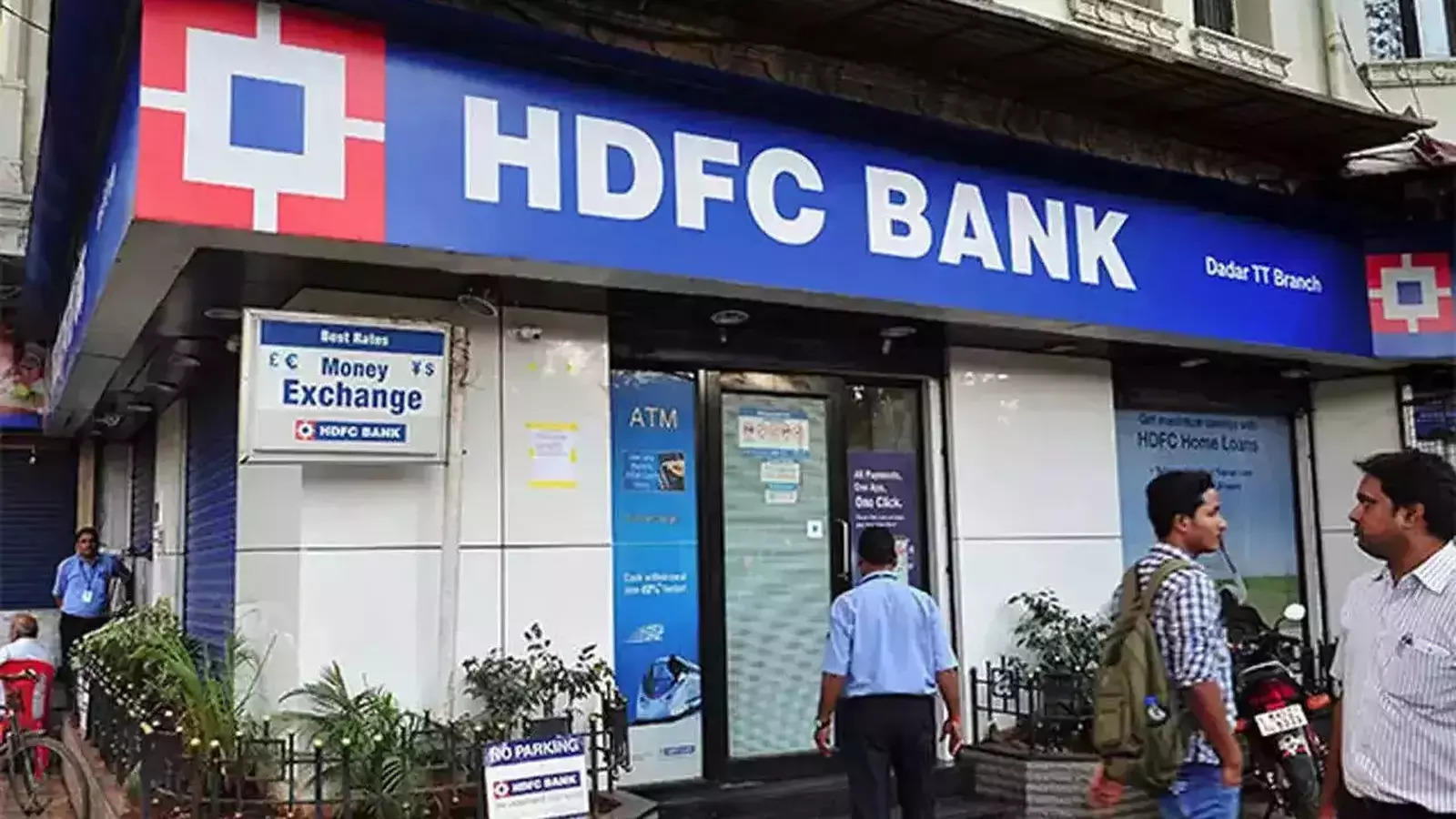
When the chairman of India's largest private sector bank walks out citing "values and ethics" — without naming a single specific concern — and three senior executives are fired days later over a cross-border mis-selling scandal, the silence itself becomes the loudest alarm bell in Indian banking history.
On the night of Wednesday, March 18, 2026, as Indian equity markets lay dormant, HDFC Bank quietly dropped a bombshell into the stock exchange filing system. Atanu Chakraborty — the part-time chairman and independent director of India's largest private sector bank, a man who spent decades as one of India's most senior civil servants, former Gujarat-cadre IAS officer and former Secretary of the Department of Economic Affairs — had resigned. With immediate effect. One carefully crafted sentence explained everything, and nothing, at once: "Certain happenings and practices within the bank, that I have observed over last two years, are not in congruence with my personal values and ethics."
No specific allegation. No named individual. No named practice. No elaboration. Just a deliberate, measured departure from a man who chose his words with the precision of a lifelong bureaucrat. The Indian banking industry woke up the next morning to a question it had no answer for: what did he see?
Within hours, HDFC Bank shares had tumbled more than five percent on the BSE — their sharpest single-day fall in nearly two years — erasing approximately seven billion dollars in market capitalization. An emergency investor call was arranged. BlackRock's portfolio manager called out management on a live call with the bluntness of someone who has watched too many corporate cover-ups. And two days later, three senior bank executives were terminated in connection with a mis-selling scandal at the bank's Dubai office that had already drawn regulatory action from international watchdogs months earlier. This is not a normal sequence of events. This is a story about governance, the opacity of power, the fragility of institutional trust, and what happens when India's most important bank stumbles — in public.
Who Is Atanu Chakraborty — And Why His Exit Is Different
To understand why this resignation matters beyond a standard corporate reshuffle, it is essential to understand who Atanu Chakraborty is. He is not a professional banker who jumped ship over a compensation dispute. He is not a politically appointed figurehead with nominal authority. Chakraborty is a former IAS officer of the Gujarat cadre — one of the most respected administrative services in India's bureaucratic ecosystem — who rose to become Secretary of the Department of Economic Affairs under the Government of India, one of the most consequential economic policymaking roles in the country.
He joined HDFC Bank's board as an independent director in 2018, and assumed the role of part-time non-executive chairman in 2021. His reappointment was approved by the Reserve Bank of India in May 2024 for a fresh term through May 2027. In other words, he was not approaching the end of his term. He had three more years ahead of him. He walked away from them voluntarily, immediately, and without external pressure.
His resignation letter, dated March 15 and submitted to the exchange on March 17, is a masterclass in communicating a great deal through minimal disclosure. He praised the middle and junior levels of the bank as the core of what could be a "reimagined organization." He noted, with notable care, that the benefits of the 2023 mega-merger between HDFC Ltd. and HDFC Bank were "yet to be fully fructified." And he offered one sentence about ethics — so carefully worded that it closed no doors and opened many questions.
Certain happenings and practices within the bank, that I have observed over last two years, are not in congruence with my personal values and ethics.
— Atanu Chakraborty, Resignation Letter, March 15, 2026For a man of Chakraborty's institutional pedigree, resignation is not an act taken lightly or impulsively. Senior bureaucrats and independent directors at major financial institutions do not resign citing ethics in countries where financial regulation is tight and institutional relationships are carefully managed, unless they believe the gravity of the situation warrants exactly this kind of signal. The phrasing "over the last two years" is particularly significant — it brackets a period beginning roughly around mid-2024, after the initial integration of HDFC Ltd was underway and HDB Financial Services was preparing for its IPO.
Corporate governance expert Shriram Subramanian of InGovern Research Services described the resignation as "definitely a big surprise," noting that the board itself should constitute a committee of independent directors to formally reach out to Chakraborty and investigate the concerns he raised, rather than allowing the matter to dissipate without accountability. Instead, HDFC Bank's management initially positioned the exit as a "non-material" interpersonal difference — a framing that investors, notably, did not accept.
The Emergency Investor Call — And the BlackRock Moment
On Thursday, March 19, as HDFC Bank shares plunged to a 52-week low of ₹772 on the BSE before recovering slightly, management rapidly assembled an emergency call with analysts and institutional investors. Interim chairman Keki Mistry — the former Vice Chairman and CEO of HDFC Ltd., who had been rushed into the role with RBI approval within hours of Chakraborty's departure — led the call alongside CEO and Managing Director Sashidhar Jagdishan and several independent directors.
The board's collective message was clear: the resignation was non-material. No specific governance, operational, or regulatory issues had been brought to the board's attention. The bank's risk and audit processes were robust. The RBI had "sound financials" at the bank. Everything was under control. The stock decline was an overreaction.
Less than thirty minutes into the call, investors were not buying it. Prashant Periwal, a portfolio manager at BlackRock Asset Management — one of the world's largest investment firms, with significant exposure to HDFC Bank through its India-focused funds — delivered a pointed statement that cut through every layer of corporate reassurance. His precise words, as reported by Bloomberg and Disruption Banking, encapsulated what every large institutional investor in the room was thinking: "So far, whatever I heard on this call doesn't make me any wiser than I was an hour ago… What exactly was it? Because he was the chairman of the bank. He was not like any other employee that resign saying something and it means nothing."
It was a rare moment of activist frustration on a formal investor call. Foreign institutional investors collectively hold more than 47 percent of HDFC Bank's equity. When the largest asset manager in the world publicly questions management's transparency on an emergency call, it signals that the governance discount is not a short-term pricing anomaly — it is a substantive concern that will not be resolved by platitudes. Macquarie Research, within the same timeframe, removed HDFC Bank from its marquee buy list, maintaining an "outperform" rating but citing a "governance overhang" as a drag on near-term performance.
With over 47% of HDFC Bank's equity held by foreign institutional investors, any sustained shift in their positioning would not merely affect share price — it would signal a structural re-rating of governance quality at India's largest private lender. HDFC Bank has long commanded a premium valuation among Indian bank stocks precisely because of its perceived governance strength. That premium is now under challenge.
The Post-Merger Shadow: The HDFC Merger That Changed Everything
To fully contextualize the current crisis, it is necessary to revisit the event that reshapes nearly every conversation about HDFC Bank today: the merger of HDFC Ltd. with HDFC Bank, completed on July 1, 2023. Described at the time as one of the largest mergers in Indian corporate history, it consolidated India's biggest mortgage lender into its largest private sector bank, creating a behemoth with a balance sheet that stood at approximately ₹40.89 lakh crore as of December 2025.
The strategic logic was impeccable on paper. HDFC Bank would gain direct access to the enormous home-loan portfolio of HDFC Ltd., cross-sell financial products across a vastly expanded customer base, and realize synergies from unified operations. The Reserve Bank of India formally designated the combined entity a Domestic Systemically Important Bank — commonly known as a D-SIB, or informally, "too big to fail" — imposing additional capital buffer requirements precisely because the consequences of distress at HDFC Bank extend far beyond its shareholders to the stability of the Indian financial system itself.
But large mergers are not purely financial events. They are governance integration events. Two institutions with distinct cultures, different management philosophies, different processes for escalating concerns and resolving internal disagreements — compressed into a single legal entity over a compressed timeframe. The integration, as Chakraborty himself noted in his resignation letter, was "yet to be fully fructified." That observation, from the chairman who oversaw the merger and is now walking away, carries an unmistakable weight.
The Financial Numbers Tell a Story of Transition, Not Crisis
Before assigning catastrophic meaning to the governance drama, the underlying financial picture must be examined with precision. HDFC Bank reported a standalone net profit of ₹67,335 crore for the full fiscal year 2025 — a 10.7 percent year-on-year increase. For Q3 FY2026 (the December 2025 quarter), net profit stood at ₹18,654 crore, modestly exceeding market estimates. Gross advances rose 11.9 percent year-on-year to ₹28.4 lakh crore. Total deposits reached ₹28.5 lakh crore. Gross non-performing assets remained controlled at 1.24 percent as of December 2025.
However, there are measurable pressure points that deserve attention. Net interest margins — the spread between what a bank earns on its loans and pays on its deposits, the single most important indicator of a bank's core lending profitability — have compressed to a range of 3.3 to 3.5 percent in early 2026. Pre-merger, HDFC Bank consistently operated at NIMs of around 4.1 percent. The compression reflects the higher cost of borrowings inherited from HDFC Ltd. and a larger proportion of lower-yielding mortgage loans in the portfolio. The loan-to-deposit ratio, which spiked alarmingly to 110 percent immediately post-merger, has been brought back down to approximately 96 percent through sustained deposit mobilization efforts — but management's own target is to bring it below 90 percent in FY2027.
HDFC Bank — Financial Health Dashboard
| Metric | Value (Q3 FY26 / FY25) | Status | Benchmark / Context |
|---|---|---|---|
| Full-Year Net Profit (FY25) | ₹67,335 Crore | ▲ +10.7% YoY | Broadly in line with market expectations |
| Q3 FY26 Net Profit | ₹18,654 Crore | Beat estimates of ₹18,473 Cr | Flat QoQ; growth momentum slowing |
| Net Interest Margin (NIM) | 3.3% – 3.5% | ⚠ Under Pressure | Pre-merger NIM: ~4.1%; Peer ICICI: ~4.3% |
| Gross NPA Ratio | 1.24% | Healthy | Strong underwriting quality maintained |
| Loan-to-Deposit Ratio | ~96% | Improving, above target | Post-merger peak: 110%; Target: <90% by FY27 |
| Gross Advances Growth | ▲ 11.9% YoY | Solid credit expansion | ₹28.4 Lakh Crore total advances |
| Total Deposits | ₹28.5 Lakh Crore | Growth lagging advances | Deposit mobilization under competitive pressure |
| Share of Indian Banking Deposits | ~12% | D-SIB Designated | Systemically critical to Indian financial stability |
The picture that emerges is of a bank that is fundamentally solvent, profitable, and operationally sound — but one that is navigating a complex post-merger digestion phase, with compressed margins, deposit growth lagging credit growth, and a management team now tasked with convincing both regulators and global investors that the governance framework remains intact. That is a harder sale to make after a chairman resigns citing ethics than it was the week before.
The Dubai Scandal: AT1 Bonds, NRI Clients, and the DFSA's Action
Two days after Chakraborty's resignation, on March 20-21, 2026, the second shoe dropped — and it was far more specific than the chairman's deliberately vague departure. HDFC Bank confirmed that it had terminated three senior executives over compliance failures at its Dubai International Financial Centre branch in the United Arab Emirates. According to multiple sources, the executives — described as the head of a business division, an executive vice-president, and a senior vice-president — were dismissed following an internal investigation into the alleged mis-selling of Credit Suisse's Additional Tier-1 bonds to Non-Resident Indian clients through the Dubai branch.
Additional Tier-1 bonds, or AT1 bonds, deserve careful explanation because their nature is central to understanding why their mis-sale is so serious. AT1 bonds are complex financial instruments — classified as regulatory capital under Basel III banking rules — that sit near the bottom of a bank's capital structure. They are specifically designed to absorb losses if a bank comes under financial stress, and they carry explicit risk of full write-down or conversion into equity if the issuing institution's capital ratios fall below certain thresholds. When Credit Suisse collapsed in March 2023, approximately $17 billion in its AT1 bonds were written to zero — wiping out those bondholders entirely, even though equity shareholders received some compensation, inverting the normal seniority of claims and shocking global fixed-income markets.
Selling such instruments to retail clients or NRI investors — who may have been seeking "safe, fixed-return" products — without full disclosure of these risks is not merely a compliance lapse. It is a fundamental breach of client trust. Allegations emerged that HDFC Bank's Dubai branch staff had been representing these bonds in terms that obscured their risk profile, effectively deceiving clients into assuming risk they would never have voluntarily accepted with full information.
The Dubai Financial Services Authority, the independent regulatory arm of the DIFC, did not wait for HDFC Bank to act. As far back as September 2025 — six months before the current crisis broke publicly — the DFSA barred HDFC Bank's DIFC branch from onboarding new customers while an investigation was underway. HDFC Bank's internal inquiry into the matter concluded on March 18, 2026 — the same day as Chakraborty's resignation was filed — and the terminations followed days later. The bank, in a formal statement, acknowledged "certain gaps in client-onboarding requirements at its DIFC branch in the UAE" and confirmed that "appropriate remedial actions have been taken in line with internal policies."
The bank identified certain gaps in client-onboarding requirements at its DIFC branch in the UAE and has completed a detailed and objective review of the matter. Personnel changes have been undertaken along with appropriate action as per the Bank's conduct regulation.
— HDFC Bank Official Statement, March 20–21, 2026The timing is not subtle. A DFSA ban in September 2025. An internal investigation concluded on March 18, 2026. A chairman who resigned citing ethics observed over "the last two years," on that same date. Three senior executives terminated within 48 hours. Whether the AT1 mis-selling is precisely what Chakraborty was referring to in his resignation — or whether it is merely one of several issues he had been tracking — remains unconfirmed. But the convergence of timelines is impossible to ignore.
The case also raises broader questions about HDFC Bank's international operations and compliance culture in its overseas branches. Cross-border wealth management, particularly when serving NRI clients who place significant trust in the brand recognition of a large Indian institution, creates an obligation that extends beyond regulatory minimums. The sale of complex structured products to individuals who may not have the financial sophistication to evaluate their risks is, in markets with mature regulatory frameworks, treated as a serious violation — one that regulators in Dubai have apparently viewed with sufficient gravity to impose client-acquisition restrictions for six months.
A Timeline of the Crisis
The Cascade: A Pattern of Senior-Level Departures
The exits of Chakraborty and the three Dubai executives do not stand alone. They follow a discernible pattern of senior-level departures from HDFC Bank that, viewed individually, might each be explained away by routine corporate lifecycle events. Viewed together, they suggest an institution in the middle of a significant internal reckoning.
Rahul Shyam Shukla, the Group Head of Corporate and Business Banking — a key institutional role at any large commercial lender — departed in October 2025, citing personal reasons. Bhavesh Zaveri, an executive director at the bank, was also among those who exited during this period. These are not low-level departures; they are figures who would have had substantial visibility into the bank's internal operations, governance dynamics, and the conditions of post-merger integration.
When a bank of HDFC's size and stature sees its chairman, its corporate banking head, an executive director, and three Dubai-based senior executives all depart or be removed within a rolling eighteen-month window — and when the chairman's departure explicitly invokes ethics — the question of whether these are independent events or interconnected symptoms of a broader internal stress becomes entirely legitimate. The board's stated position, that they have no knowledge of specific governance concerns, is difficult to reconcile with the observable pattern of departures.
- Atanu Chakraborty — Part-Time Chairman & Independent Director — resigned March 2026, citing personal ethics and bank practices
- Three Dubai DIFC Executives — Division Head, EVP, Senior VP — terminated March 2026 following AT1 mis-selling investigation
- Rahul Shyam Shukla — Group Head, Corporate & Business Banking — resigned October 2025, citing personal reasons
- Bhavesh Zaveri — Executive Director — departed during the preceding period of post-merger transition
What Does HDFC Bank's Systemic Importance Mean in This Context?
The RBI's designation of HDFC Bank as a Domestic Systemically Important Bank is not a ceremonial classification. It is a regulatory acknowledgment that this institution's health is not merely a matter for its shareholders and depositors — it is a matter of national financial stability. At approximately 12 percent of India's total banking system deposits, a disorderly loss of confidence in HDFC Bank would have knock-on effects across the Indian financial system that no regulator would countenance.
This is precisely why the RBI moved with unusual speed after Chakraborty's resignation — approving Keki Mistry's appointment as interim part-time chairman for three months within hours of the resignation filing. It is also why the RBI issued a public statement affirming that HDFC Bank has "sound financials" and is run by a professional board and competent management — an almost unprecedented public intervention by a central bank in response to a corporate governance event at a regulated institution.
That intervention was necessary because the alternative — allowing market uncertainty to fester without official reassurance — carried systemic risks. Depositor confidence is among the most fragile assets any bank possesses. If questions about governance at HDFC Bank were to evolve into questions about institutional safety, the consequences could include deposit outflows, increased cost of funds, and the very margin compression that the bank has been working to arrest since the merger. The RBI understands this. Its rapid communication was not routine — it was prophylactic.
Stock Analysis: Pricing Governance Risk
The market's reaction to the Chakraborty resignation — a fall of more than five percent, touching a 52-week low — was not disproportionate for an institution of HDFC Bank's profile. What it reflected was the pricing of what analysts now call a "governance discount" — a reduction in the premium that investors are willing to pay for a stock when uncertainty about internal governance quality displaces confidence in institutional transparency.
For context, HDFC Bank had for many years traded at a significant premium to its peers — a premium built on an almost unblemished reputation for governance, regulatory compliance, and financial discipline. That premium is being structurally questioned. ICICI Bank, HDFC Bank's closest competitor in the private sector, currently operates at net interest margins of approximately 4.3 percent — some 80 to 100 basis points higher than HDFC Bank's current compressed range. Temasek Holdings, the Singaporean sovereign wealth fund, has reportedly been increasing its position in HDFC Bank at current valuations, viewing a price-to-book ratio of approximately 1.5x as an attractive entry point for a long-duration holding. But other Wall Street and global analysts have moved to "hold" or "reduce" recommendations, citing the combination of the governance overhang and the slower-than-expected NIM recovery.
The consensus 12-month price target for HDFC Bank's American Depositary Shares (traded on NYSE as HDB) sits in a range of approximately $36 to $40, implying meaningful upside from current levels — but only if the governance questions are resolved clearly and the NIM trajectory shows visible improvement through FY27. The path to that resolution runs through the appointment of a permanent chairman, the RBI's read of the AT1 mis-selling matter, and whether any additional details about Chakraborty's specific concerns enter the public record.
The Bancassurance Regulatory Complication
The governance crisis also erupted against an already-tense regulatory backdrop. On March 6, 2026 — less than two weeks before the chairman's resignation — the RBI proposed sweeping new rules for bancassurance, the practice whereby banks sell insurance products alongside loans. The proposed framework would mandate explicit, active customer consent for every insurance product sold in conjunction with a bank loan, effectively dismantling the "automatic bundling" model that has generated significant high-margin fee income for major private sector banks including HDFC Bank, Kotak Mahindra Bank, and State Bank of India.
For HDFC Bank specifically, fee income from insurance distribution through its banking channels is a material non-interest revenue stream. The proposed rules, if enacted as drafted, would apply downward pressure to this income stream precisely at the moment when core net interest income growth is constrained by NIM compression. The cumulative effect of regulatory friction, governance uncertainty, and competitive pressure from ICICI Bank's superior margins created what one analyst described as "dry tinder" — a combustible backdrop that the Chakraborty resignation ignited.
The Silence of Specifics — And Why It Matters
One of the most unusual features of this entire episode — and one that has drawn significant commentary from corporate governance professionals — is the studied vagueness of Chakraborty's public position. His letter does not name a specific person. It does not name a specific practice. It does not name a specific transaction, department, or decision. It says, in essence: something I observed did not meet my standards. I'm leaving.
From a legal and regulatory perspective, this is entirely defensible. Independent directors in India operate under a complex web of fiduciary duties and disclosure obligations. Making specific allegations in a public resignation letter without supporting evidence could expose Chakraborty to legal risk. Remaining silent about specifics, while communicating through the act of resignation itself, is a calculated approach that allows him to preserve his professional integrity while avoiding actionable statements.
But the ambiguity creates its own problems for the institution. Markets hate uncertainty. Analysts cannot model a risk they cannot identify. And when the board itself states on a live investor call that it has no awareness of specific concerns — while the chairman who raised those concerns is not present to clarify — the gap between what is known and what is disclosed becomes a governance problem in its own right. Corporate governance expert Subramanian's recommendation — that the board constitute a formal committee of independent directors to engage Chakraborty and report findings to stakeholders — represents the minimum credible response to an episode of this nature. As of this writing, no such formal committee has been publicly announced.
HDFC Bank will lose its governance premium or people will start questioning it if the bank doesn't proactively do something about this matter.
— Shriram Subramanian, Founder & MD, InGovern Research ServicesWhat Comes Next — The Signals to Watch
The immediate question facing HDFC Bank is the permanent chairmanship. Keki Mistry's interim appointment runs for three months — meaning the board must identify, and the RBI must approve, a permanent non-executive part-time chairman before approximately June 2026. Who that person is, and what implicit mandate their appointment carries, will be the single most consequential signal emerging from this episode.
A chairman with a strong regulatory background — someone with deep experience in banking supervision, risk management, or senior policymaking — would signal that the board and the RBI are treating the governance question as substantive and requiring remediation. A chairman from a purely corporate or commercial background might signal a preference for continuity over recalibration. The choice matters, and the market will read it carefully.
The FPI holding trajectory also deserves attention. With foreign institutional investors holding more than 47 percent of the bank's equity, sustained selling pressure from overseas investors would indicate that the governance question is being priced as a persistent concern rather than a one-cycle event. The first quarter after the chairman's appointment will provide the earliest data on whether institutional confidence has stabilized or continued to erode.
The AT1 mis-selling matter may not be fully resolved. The DFSA's restrictions on the DIFC branch, imposed in September 2025, have not been publicly lifted as of this reporting. Whether affected NRI clients pursue legal or regulatory redress, whether the DFSA takes further regulatory action against the branch itself, and whether any details of the internal investigation are disclosed to the Indian regulator or the public — all of these remain open questions that could add further dimensions to the reputational exposure HDFC Bank now carries.
And perhaps most importantly: whether Atanu Chakraborty says anything more. His resignation letter was calibrated to communicate concern without providing ammunition. He may have nothing further to add publicly. He may have said everything he intends to say. Or he may, in time, choose to speak more specifically about what he observed. The uncertainty of that possibility — the unknown quantity of what he knows — is, in itself, a governance risk that no investor call or official statement can fully extinguish.
- Permanent Chairman Appointment: Who the RBI approves, and from what background, will indicate the regulatory reading of what HDFC Bank needs structurally
- FPI Holding Changes: Any sustained decline in the 47%+ foreign institutional ownership would signal that the governance discount is being treated as structural, not transitory
- DFSA Restrictions on DIFC Branch: Whether the Dubai regulator lifts or extends its new-client ban will indicate the severity of the international compliance failure
- NIM Trajectory in Q4 FY26: Recovery toward pre-merger levels of 4.1% would materially improve the investment case; further compression would compound governance-related selling pressure
- Further Statements from Chakraborty: His silence is currently a risk factor in itself; any specific elaboration would clarify the nature and scope of the concerns raised
- Board Committee on Governance Review: Whether the board constitutes a formal independent committee to investigate the chairman's concerns will be watched as a credibility signal
The Broader Lesson — Governance as the Hidden Price of Scale
HDFC Bank's current predicament is, in part, a consequence of scale. The creation of a banking institution that holds 12 percent of India's total banking deposits, serves tens of millions of customers across the country and internationally, and manages a balance sheet approaching ₹41 lakh crore creates an organization of such complexity that governance failures at any layer — from the highest boardroom to an overseas branch — can generate cascading reputational consequences.
The 2023 merger, whatever its strategic merits, combined two large organizations with distinct cultural DNA into a single regulatory entity under significant time pressure. Culture integration is slower than balance sheet integration. The processes by which concerns are escalated, the informal norms around what can be said to whom, the alignment between stated values and daily operational decisions — these take years to harmonize, and they cannot be accelerated by decree. Chakraborty's reference to practices observed "over the last two years" suggests that he was watching these integration dynamics carefully, and that what he observed ultimately became irreconcilable with his personal framework of institutional integrity.
For India's banking sector more broadly, the episode carries a reminder that even the most admired institutions carry governance risk — and that governance risk, when it surfaces, can erase years of reputational capital with remarkable speed. The premium that HDFC Bank commanded was built over decades. It is being stress-tested in days. Investors, regulators, and the bank's own management are now engaged in the difficult work of demonstrating that the institution's foundational governance quality remains intact, even as a significant pillar of that governance — its chairman — has publicly declared otherwise.
That is not a normal situation. That is precisely why the title of this article is not hyperbole.
Conclusion: The Question India's Banking System Cannot Ignore
Atanu Chakraborty's resignation is not the end of a story. It is the beginning of a reckoning. The most consequential facts are not what has been disclosed — they are what has not been. The silence of a former Secretary of the Department of Economic Affairs, a man who chose every word of his resignation letter with the precision of someone who spent decades navigating the most politically sensitive corridors of Indian economic policymaking, is not blank. It is encoded with implications that investors, regulators, and depositors are now actively trying to decode.
HDFC Bank remains a fundamentally sound institution — profitable, systemically important, and backed by a regulator that has moved quickly to stabilize confidence. The financials, taken alone, do not tell a story of crisis. But governance is not a financial metric. It is the invisible infrastructure on which every financial number is built. When the chairman of the largest private sector bank in India — a Domestic Systemically Important Bank, a cornerstone of the country's financial architecture — walks away citing values and ethics, and when three executives are terminated days later over a cross-border mis-selling scandal that regulators flagged six months earlier, the question of what the bank's internal governance actually looks like is not an abstract concern.
It is the most important question in Indian banking right now. And until it is answered, clearly and with specificity, the governance discount will remain. Not because investors are irrational. But because opacity, in a world of activist shareholders and real-time scrutiny, is itself a form of risk. And HDFC Bank has, for the first time in a very long time, given the market a reason to price it.
Post a Comment