In March 2026, Royal Challengers Bengaluru - yes, the RCB we all grew up watching - was sold for Rs 16,660 crore. That is $1.78 billion in US dollars. The buyer was not one company but four: Aditya Birla Group (ABG), The Times of India Group, Bolt Ventures (run by American sports investor David Blitzer), and Blackstone, one of the world's largest private equity firms.
The seller was United Spirits Limited, which owned 100% of the franchise. The deal is all cash, regulatory approval is still pending, and the new ownership kicks in from the 2026 season. Aryaman Birla becomes RCB's chairman, and Satyan Gajwani of Times Group becomes vice-chairman.
Now, as an FP&A student, my first question was: where did Rs 16,660 crore come from, and does this deal even make financial sense? Lets walk through it properly.
First, why is RCB so expensive?
RCB's own revenue in FY25 was Rs 504 crore. The deal price is Rs 16,660 crore. That means the buyers paid 33 times the annual revenue of the franchise. In most industries, companies are bought at 1x to 3x their revenue. So 33x sounds completely crazy. But there are very specific reasons why IPL franchises command these kinds of prices, and once we understand them, the numbers start making more sense.
Reason 1: Scarcity
There are only 10 IPL franchises in the world. That is it. You cannot create more. And at any given time, only one or two are even available for sale. So when a franchise does come on the market, dozens of billionaires and global funds are all competing for the same asset. When many buyers chase very few sellers, the price goes up, regardless of what the earnings look like on paper. This is basic supply and demand, applied to a trophy asset.
Reason 2: The revenue is basically guaranteed before the season even starts
This is the part that makes IPL franchises look very different from regular businesses. Around 70 to 75% of every team's revenue comes from what is called the central pool — money that BCCI collects from broadcasting rights and league sponsors, then divides equally among all 10 teams. Under the current deal covering 2023 to 2027, the total pool is Rs 48,390 crore. Each team gets roughly Rs 425 to Rs 500 crore every single year, automatically, whether they win or lose.
Think about that. Before RCB sells a single ticket or signs a single sponsor, they already have Rs 425 to 500 crore sitting in the bank. That is an annuity. It is as close to guaranteed income as a sports business can get. This is what makes IPL teams so attractive to financial investors, the downside is protected.
Reason 3: RCB's brand is at its all-time peak
RCB won its first-ever IPL title in 2025. It also won the WPL in both 2024 and 2026. These titles did something very specific to the franchise's financial value. After the 2025 IPL win, Houlihan Lokey, a global investment bank that tracks sports franchise values, calculated RCB's brand value at $269 million — the highest of any IPL team. A stronger brand means you can charge more for jersey sponsorships, attract bigger corporate partners, and sell more merchandise. All of that feeds into higher future cash flows, which pushes the valuation up.
Now, how did they actually arrange Rs 16,660 crore?
This is where it gets really interesting from an FP&A perspective, because ABG did not simply write a cheque. They built a consortium — a group of four partners, and each one contributed a different type of money.
ABG and Times Group contributed what is called corporate equity. ABG is a massive conglomerate with 165 years of history, businesses across 40+ countries, and a very strong credit profile. They can raise bonds, use their existing balance sheet, or borrow at relatively low interest rates because lenders trust them. Times Group can fund its share from its own operating cash flows, since it runs a highly profitable media business.
Blackstone and Bolt Ventures contributed private equity capital. These are professional investment funds whose entire job is to pool money from large institutional investors — pension funds, sovereign wealth funds, university endowments, and deploy it into high-return opportunities.
Why does this structure matter financially?
Because different types of capital have different costs. When you blend cheap corporate debt from ABG with equity from Blackstone, the overall average cost of funding the deal comes down. In finance, this average is called the Weighted Average Cost of Capital, or WACC. A lower WACC means the investment needs to generate a lower return to be profitable, which makes the deal easier to justify at a high price.
There is another benefit too. By splitting the deal four ways, each partner writes a smaller cheque individually. That spreads the risk. And when lenders see four financially strong, credible sponsors backing a project together, they are more comfortable offering favorable loan terms. The consortium structure is not just about splitting costs, it is a deliberate financial strategy to make the whole deal cheaper and safer.
How will RCB make money under the new owners?
Stream 1: Central pool money (roughly 73% of total revenue)
As explained above, every IPL team gets Rs 425 to 500 crore per year from BCCI's central distribution. This comes from the broadcasting rights deal — Star Sports, JioCinema, and international broadcasters all pay BCCI for the right to air IPL matches. BCCI splits this money equally across all 10 teams. This is the foundation of the revenue model and the main reason the downside is limited.
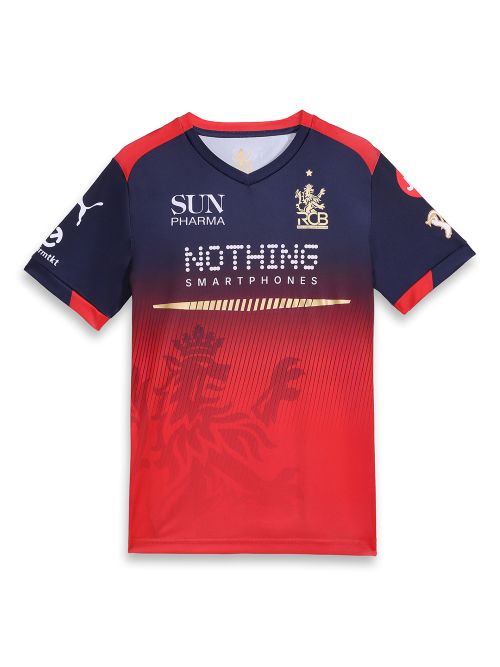
Stream 2: Team sponsorships (roughly 20 to 23% of revenue)
This is the money RCB earns directly from its own corporate partnerships. The biggest one is the jersey title sponsor, the company whose name or logo appears on the front of the player's shirt. For IPL 2026, that sponsor is Nothing, the London-based technology brand. They replaced Qatar Airways, which had a three-year deal that ended after the 2025 season. These jersey deals for a team of RCB's stature can run Rs 100 to 200 crore per year. RCB also has associate sponsors, kit manufacturers, and digital partners who pay separately.
The reason RCB can charge premium rates here is because of its fan base. It has one of the largest, most engaged followings of any IPL team — driven significantly by Virat Kohli, who is arguably the most famous cricketer in the world. Sponsors pay more to be associated with Kohli and RCB because the visibility is enormous.
Stream 3: Gate receipts (a small but growing share)
RCB plays home games at the M. Chinnaswamy Stadium in Bengaluru, which holds over 40,000 people. For most RCB home games, it is close to a sell-out. Ticket sales, hospitality boxes, and premium fan experiences bring in additional revenue. This is smaller relative to media money, but it is reliable and has grown steadily since cricket returned to full stadiums after COVID.
Stream 4: Merchandising
Jerseys, caps, phone cases, scarves — licensed RCB merchandise sold through online stores and retail partners. After the 2025 IPL title win, merchandise sales saw a spike. This stream is currently the smallest of the four, but here is where the new ownership can make a real difference. ABG owns fashion and retail businesses. Plugging RCB merchandise into ABG's existing distribution networks could meaningfully grow this line.
What does each partner actually get out of this?
The four partners are not in this deal for the same reasons, and that is what makes the consortium so well-designed.
Aditya Birla Group (ABG)
ABG operates in metals, cement, telecom, fashion, financial services, and more. What it does not have is a major consumer entertainment asset. RCB changes that. An IPL franchise puts the Aditya Birla name in front of hundreds of millions of Indian cricket fans — including exactly the kind of young, urban, middle-class consumers ABG wants to reach. Aryaman Birla becoming chairman is not just a ceremonial role. It signals that ABG sees sports as a long-term pillar, not a side investment.
Additionally, ABG can cross-promote its own brands through RCB's platforms. Imagine Aditya Birla's retail clothing brands sponsoring team merchandise, or its insurance and financial products being marketed through RCB's app and digital content. The franchise becomes a marketing and distribution vehicle for the group's core businesses.
Times of India Group
For Times, this is the most direct strategic fit of all four partners. Times Group already owns Cricbuzz, which is the most popular cricket app in India. It owns Willow TV, which is a cricket broadcast network. It has stakes in other cricket leagues like Major League Cricket in the US and The Hundred in England.
Owning RCB completes the ecosystem. Times can now produce exclusive behind-the-scenes content about RCB, drive subscriptions on its digital platforms using RCB match coverage, and sell advertising around IPL content at a premium because it has insider access to the team. Every RCB victory creates content. Every Kohli innings creates engagement. That engagement drives ad revenue. Times Group turns RCB's sporting success directly into media business revenue.
Blackstone and Bolt Ventures
These two are pure financial investors. They are betting that the IPL, and specifically RCB, will be worth significantly more in five to seven years than it is today. India's sports economy is still early relative to its population size and the country's GDP. Blackstone and Bolt are taking a position on India's rising middle class, growing sports consumption, and the next broadcast rights cycle — which is expected to be even larger than the current one.
What is the plan to eventually sell or exit?
No one in this consortium is planning to hold RCB forever. Let us look at the exit options.
Option 1: Sell the whole franchise later at a higher price
D&P Advisory, a financial advisory firm, estimates that a buyer would pay between $2.5 and $3 billion for RCB in five to six years. At the entry price of $1.78 billion, that would represent a gain of roughly 40 to 70% in total. That kind of appreciation over five years is a solid return for an asset that also provides steady annual income from the central pool while you hold it.
The projection assumes that IPL's next media rights deal — which will be renegotiated around 2028 — will be larger than the current one. Given the league's growth in viewership, international broadcast interest, and the overall boom in cricket as a global sport, most analysts expect that assumption to hold.
Option 2: Sell a minority stake to another investor
Even before a full sale, Blackstone or ABG could sell 10 to 20% of RCB to another investor in a private transaction. Global names like KKR, Temasek, and EQT have already shown interest in IPL franchises. Selling a minority stake lets the consortium raise cash and crystallize some value without giving up control of the asset. This is a common private equity strategy — de-risk partly by bringing in a new investor, while keeping the majority of the upside.
Option 3: An IPO
No IPL team has gone public yet. But it has happened in other sports — the Atlanta Braves, Manchester United, and Madison Square Garden Sports have all been listed on stock markets. An IPO of RCB's holding company would give retail and institutional investors a chance to buy shares, generate liquidity for the consortium, and potentially lower the cost of future capital. If IPL franchise values keep rising, a public listing could become an attractive path in the next decade.
So does the deal make sense?
From a pure FP&A perspective, the numbers are challenging to justify on near-term earnings alone. Paying 33 times revenue is not something you can defend with a standard discounted cash flow model based on today's earnings. But that is not how this deal is meant to be evaluated.
The case for the deal rests on three things: the revenue floor that BCCI's central pool provides (which limits the downside), the expected growth in future media rights (which drives the terminal value), and the scarcity of the asset (which ensures there will always be buyers willing to pay more). None of that is speculative at this point — IPL has consistently delivered on all three counts over the last decade.
What makes the RCB deal particularly interesting is that all four consortium members are also getting non-financial value from the investment. ABG gets a consumer brand platform. Times Group gets a content engine. Bolt gets operational expertise in a new market. Blackstone gets exposure to India's fastest-growing entertainment sector. The financial returns are one part of the story. The strategic returns may end up being even more valuable.
For an aspiring FP&A student, this deal is a masterclass in how real M&A decisions are made — not just by looking at earnings multiples, but by understanding scarcity, structuring capital smartly, aligning the right partners, and building a credible story for how the asset grows in value over time. That is exactly the kind of thinking that separates a good financial analyst from a great one.
Sources: D&P Advisory, Houlihan Lokey, Economic Times, BCCI media rights disclosures, and company statements. This article is written for educational purposes and does not constitute investment advice.
Post a Comment